
Seaglider

Category: Glider
Model: Seaglider
Brand: Kongsberg/HII
Quantity: 4
Instrument: Non-shipboard Instrument
Equipment Condition: Normal
Maintenance Manager
Instrument Expert
Function Description
-
Remote-controlled autonomous ocean environmental monitoring vehicle: It carries various ocean measurement probes and uses changes in its buoyancy and center of gravity to glide back and forth between the ocean surface and a depth of 1000 meters, obtaining hydrological profile data.
-
Real-time data transmission: Each time it surfaces, it transmits GPS positioning and data via satellite, or receives control commands to adjust the sampling frequency, path, and dive parameters.
-
Unrestricted by seasons, sea conditions, or observation range: Powered by lithium batteries with extremely low energy consumption, it can continuously survey for three to six months or more, depending on mission requirements.
-
Ideal for long-term ocean environmental monitoring: It collects physical, chemical, and biological properties of seawater, making it significant for research on watermass, climate change, and marine ecology, etc.
Borrowing Rules
Equipment Description
Payloads
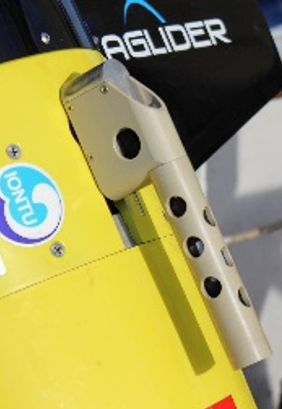
- Temperature and Conductivity (Seabird SBE CT Sail):
The Sea-Bird Scientific temperature and conductivity probe designed for Seaglider, used for measuring seawater temperature (T) and conductivity (C) within 1000 meters. This data can be converted to salinity, density, and other hydrological parameters.
|
Measurement |
Range |
Accuracy |
Resolution |
|
Conductivity |
0 – 7 S/m |
0.005 S/m |
0.0001 S/m |
|
Temperature |
-5 – 35℃ |
0.002℃ |
0.0001℃ |
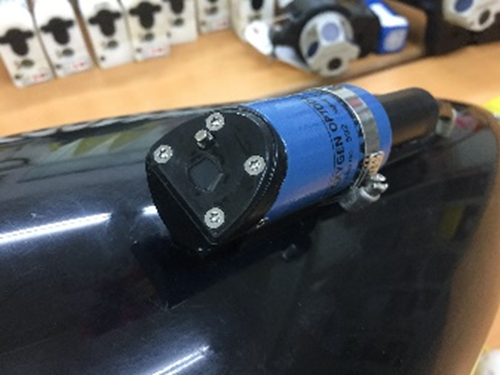
- Dissolved Oxygen (Aanderaa Optode 4831):
Manufactured by Aanderaa Data Instruments AS (AADI), uses optical principles (based on fluorescence quenching method) to measure dissolved oxygen (DO) in water.
|
Measurement |
Range |
Resolution |
Accuracy |
|
|
DO |
O2 Concentration |
0 – 500 µM |
< 1 µM |
<8 µM or 5% |
|
Air Saturation |
0 – 150% |
0.4% |
<5% |
|
|
Temperature |
-5 – 40°C |
0.01°C |
±0.03°C |
|
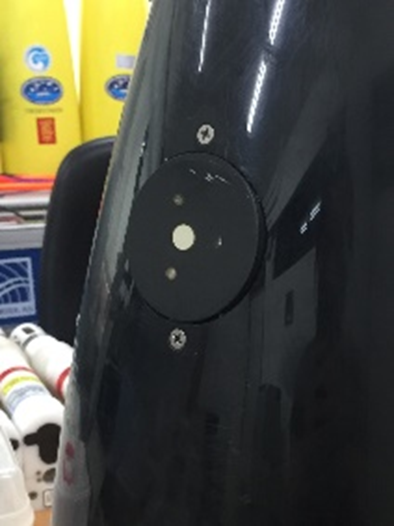
- Chlorophyll Fluorescence and Optical Backscatter (WET Labs ECO Puck):
Uses light of different wavelengths to detect chlorophyll fluorescence and backscattering in water.
|
Parameter |
Wavelength EX/EM |
Range, Sensitivity |
|
Chlorophyll (Chl) |
470/695 nm |
0 – 50, 0.025 µg/L |
|
Scattering |
532 nm |
0 – 5, 0.003 m-1 |
|
700 nm |
0 – 5, 0.003 m-1 |
Maintenance & Attendance Records
No data yet, or the spreadsheet could not be loaded. Please check the URL and that the first row has: 序號, 起始日, 結束日, 儀器狀態, 負責技術員, 航次名, 備註